Buying your first stroller? Start by thinking about how you will actually use it—not just which model is most popular. In our Strollers 101 education video, Gina explains how stroller types, newborn configurations, seat design, folding, and everyday lifestyle all affect the decision.
Start with your lifestyle, not a brand
Ask yourself where you expect to push the stroller most often: neighborhood sidewalks, city streets, parks, uneven paths, airports, or shopping centers. Think about your vehicle's trunk, stairs at home, the height of the people pushing it, and how often you will fold and lift it. A lightweight travel stroller and a larger all-terrain stroller solve different problems. As Gina explains, there may be one stroller that works well enough for many situations—or you may eventually prefer two different strollers for different purposes.
What is a stroller travel system?
A travel system is a stroller configuration that accepts a compatible infant car seat. It does not necessarily mean you must buy a stroller and car seat in a single box. Some are sold as bundles; others let you choose a stroller, compatible infant car seat, and any required adapters separately. Compatibility is model-specific, so verify the exact stroller, car seat, and adapter combination before buying.
An infant car seat can move from the vehicle to a compatible stroller without removing the child from the seat. A convertible or all-in-one car seat generally remains installed in the vehicle. Families who begin with one of those seats should choose a stroller with a newborn-approved seat, compatible bassinet, or other manufacturer-approved newborn configuration.
What makes a stroller suitable for a newborn?
Not every stroller seat is approved for use from birth. Some have a manufacturer-approved newborn recline or configuration; others require a bassinet, infant insert, or compatible infant car seat until the child meets the stroller seat's minimum age or developmental requirements. Gina demonstrates why a stroller that reclines deeply is not necessarily the same as one with a flat newborn-approved surface.
Always follow the stroller manufacturer's minimum age, size, recline, and accessory instructions. Check the baby's positioning and airway, and remember that a stroller seat or infant car seat is not a substitute for a safe sleep surface. If a bassinet is advertised for overnight sleep, verify that the exact model is approved for that use and follow its instructions.
Three common newborn stroller setups
- Newborn-approved stroller seat: Use the stroller's own seat from birth when the manufacturer explicitly permits it, with any required configuration or insert.
- Stroller bassinet: A flat newborn option that may also be useful for families who prefer not to rely on the infant car seat during walks. Not all stroller bassinets are approved for overnight sleep.
- Compatible infant car seat: Convenient for transfers between the car and stroller, but follow car seat and stroller guidance on positioning and duration of use.
Modular versus traditional stroller designs
Gina distinguishes modular strollers, whose seats can typically be removed and may reverse direction, from traditional fixed-seat strollers, whose seats stay attached to the frame. Modular designs may let a child face the caregiver or face forward. Fixed-seat designs can offer a simpler or smaller fold, although exact features vary by model.
Consider whether a parent-facing seat matters to you, whether the stroller can fold with the seat attached, and whether it can fold with the seat facing either direction.
Compact, mid-size, full-size, and jogging strollers
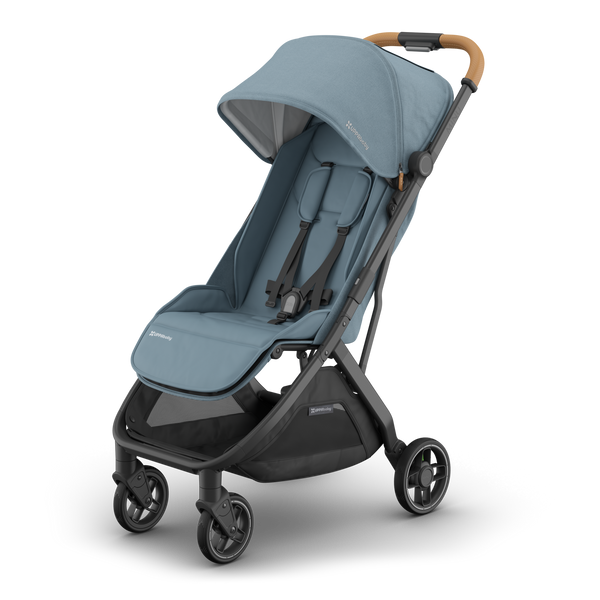
- Travel and compact strollers: Prioritize folded size, portability, and ease of carrying. Confirm airline size rules rather than assuming a stroller will fit in an overhead bin.
- Mid-size strollers: Often balance everyday comfort, storage, maneuverability, and a manageable fold.
- Full-size and all-terrain strollers: Often emphasize larger wheels, suspension, storage, and comfort on longer outings, with a larger folded footprint.
- Jogging strollers: Built for running with specialized wheel and steering features. An ordinary stroller is not automatically safe for jogging. Follow the jogging stroller manufacturer's age and use restrictions before running with a child.
- Single-to-double and double strollers: Worth exploring if you expect to transport two children. Compare seating configurations, weight limits, folded size, and real-world maneuverability.
Seven questions to ask before choosing a stroller
- Where will we use it most: pavement, trails, stores, or travel?
- Does it offer an approved configuration for our newborn?
- Do we want a portable infant car seat to connect to the stroller?
- Does the stroller fit our trunk, storage area, and daily lifting needs?
- Is a reversible, parent-facing seat important?
- How easy is it for each caregiver to push, adjust, and fold?
- Would one versatile stroller work for us, or would two specialized strollers be more practical?
Learn from specific stroller examples
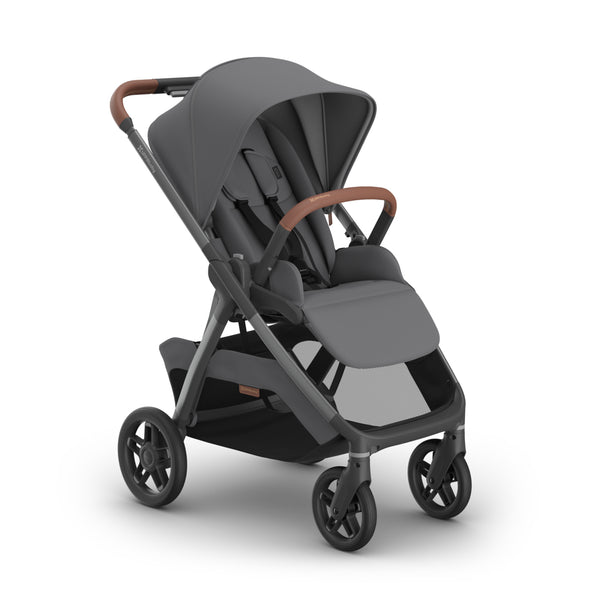
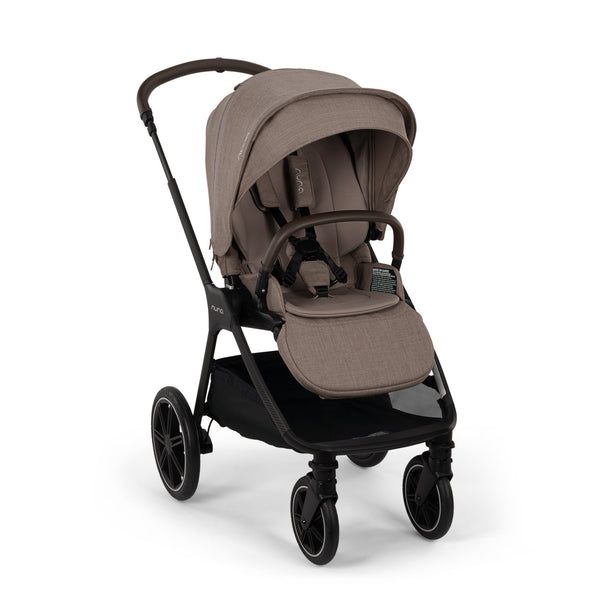
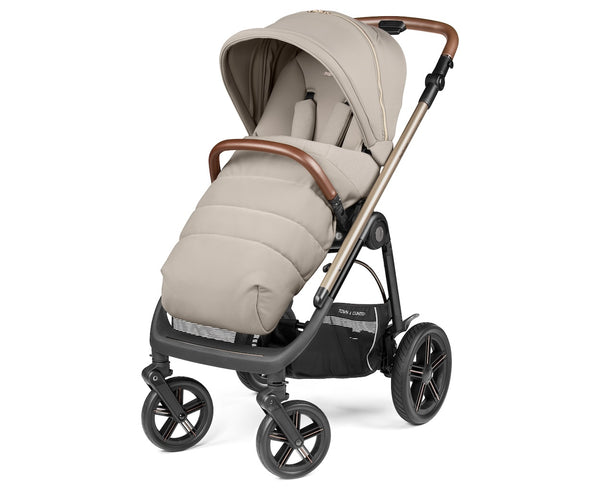
Once you know which features matter, explore our detailed product guides: UPPAbaby KONA Stroller Guide, NUNA TRIV LX Stroller Guide, and Peg Perego Veloce TC Stroller Buying Guide. Compare the features and manufacturer specifications of the current versions rather than relying on older video prices or model-year details.
Get personalized stroller guidance
If you're comparing several options, Destination Baby & Kids offers one-on-one stroller and car seat consultations in Dublin, California. The demonstration area is available by appointment only; book before visiting. During your consultation, you can compare suitable models and discuss the features that matter for your family.
Explore the Stroller & Car Seat Buying Guide Hub → | Watch Strollers 101 on YouTube →